


1.- WHITE BOARD
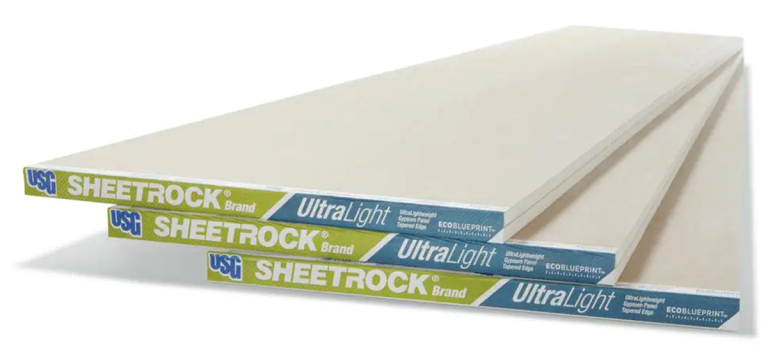
The most common type of drywall, white board, is made from compressed gypsum powder that’s held in place by heavy grade paper. White board is used to create walls and ceilings in bedrooms, living rooms, and hallways. It’s the most affordable type of drywall and comes in a broad range of thicknesses. Unlike other types of drywall, white board doesn’t have any mildew or mold resistance, so it’s not suitable for bathrooms or kitchens.
Best For: White board is best used for ceilings and walls in bedrooms, hallways, and living areas.
Common Sizes
1/4 inch: This thinner drywall thickness is used for covering worn out, damaged drywall. Since it’s also more bendable than thicker drywall, ¼-inch drywall is also suitable for creating curved walls.
3/8 inch: Slightly thicker than 1/4-inch drywall, 3/8-inch drywall is used to repair holes in drywall and can also be used for walls with a slight curve.
1/2 inch: The most common thickness of white board, 1/2-inch drywall is the standard for creating interior walls.
5/8 inch: Whereas 1/2-inch drywall is typically used for walls, this thicker drywall is the standard for ceilings.
2.-GREEN BOARD
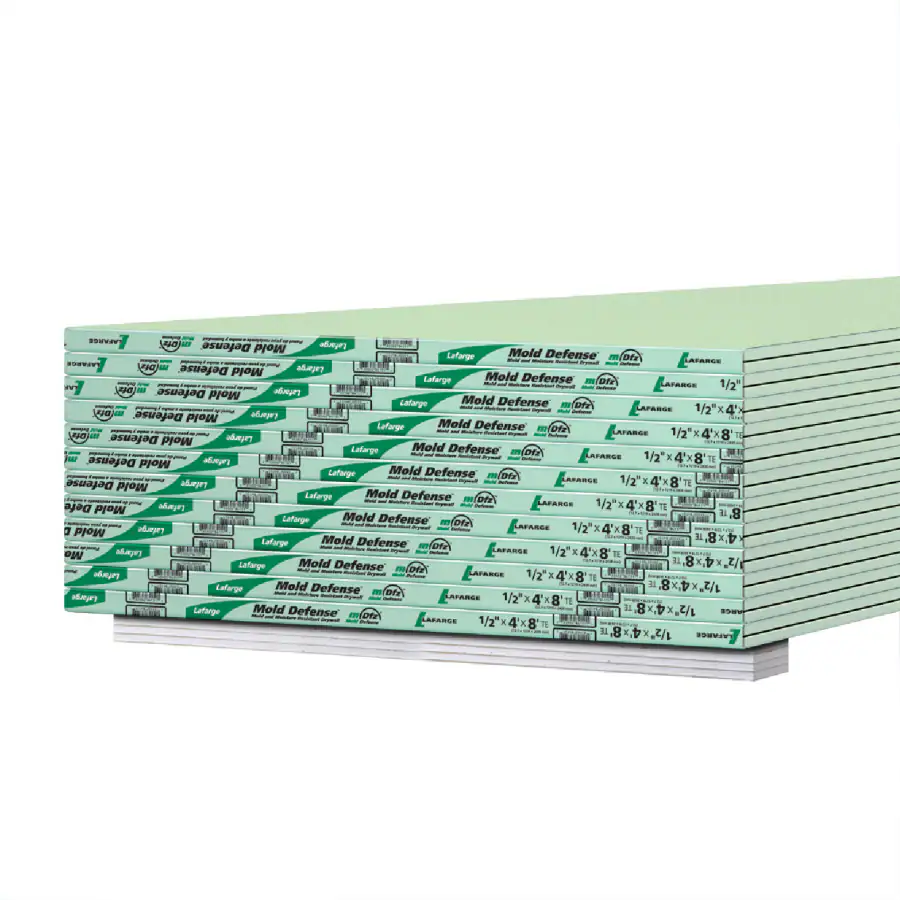
Green board is a moisture-resistant drywall that gets its name from the green-colored wax paper backing that gives it its resistance to water. Its moisture-resistant qualities make it a popular choice for kitchens and bathrooms, though Coluzzi notes that you should only use it for walls and ceilings that do not come into contact with water.
Best For: Its resistance to moisture makes it suitable for walls in kitchens, bathrooms, laundry rooms.
3.-BLUE BOARD
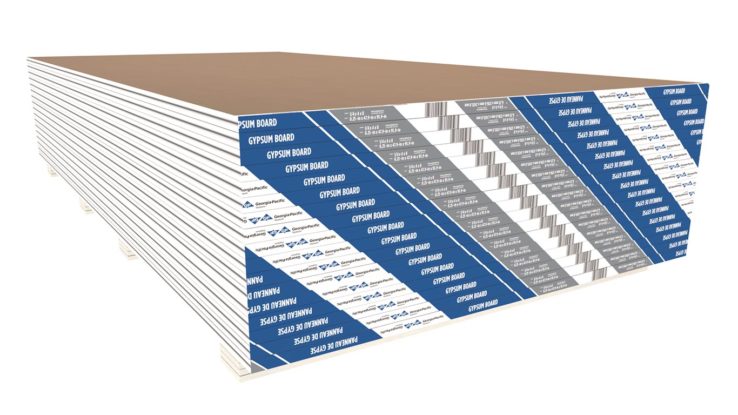
Blue board is a porous type of drywall that is designed specifically to bond with veneer plaster. Unlike white board drywall, which has seams you must tape, mud, and sand multiple times, blue board is simply taped then veneered over with a thick layer of plaster. While this method is expensive and requires technique and skill that’s beyond what the average DIYer can handle, it produces an aesthetically superior finish that’s more durable than standard drywall.
Best For: Blue board is specifically designed for veneer plastering
4.-PURPLE BOARD
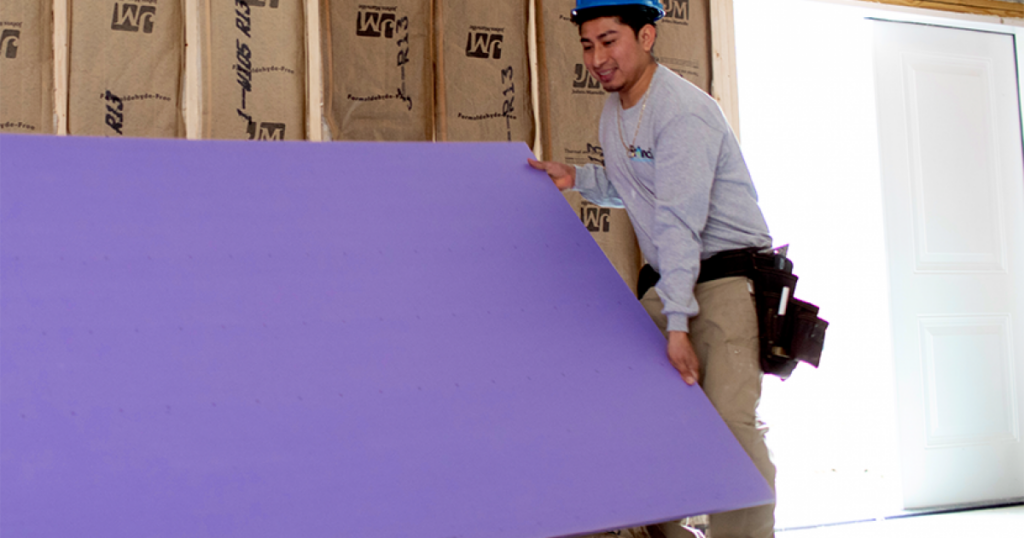
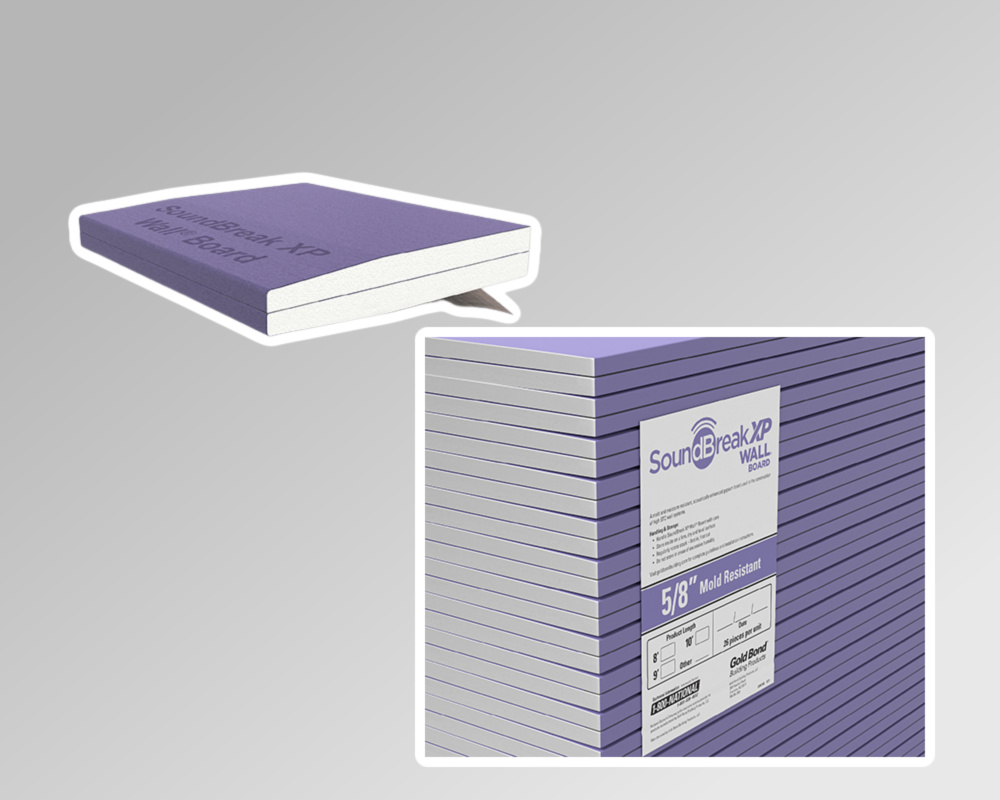
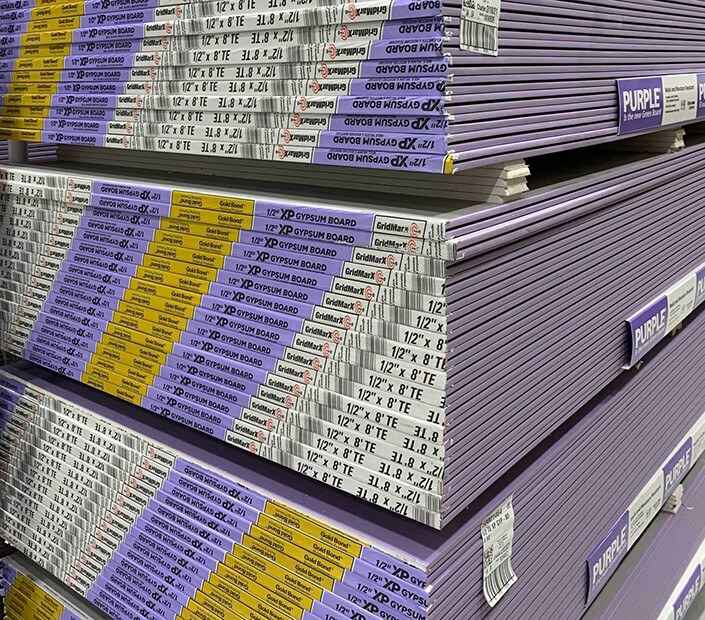
Purple board, a type of drywall made by a gypsum core that’s resistant to moisture, mildew and mold. These qualities make purple board ideal for areas prone to moisture. “Purple is water-, mold-, and mildew-resistant and should be used at any wet location,” Colluzi says.
This mold-resistant drywall also has a heavier paper coating than standard white board, which makes it more resistant to scuffs, dents, and scratches. Its ability to endure abuse makes purple board an attractive drywall option for high-traffic parts of the home, such as hallways, stairwells, and garages.
Best For: Wet humid areas such as bathrooms, kitchens, and laundry rooms, and high-traffic parts of the home.
5.-PAPERLES BOARDS
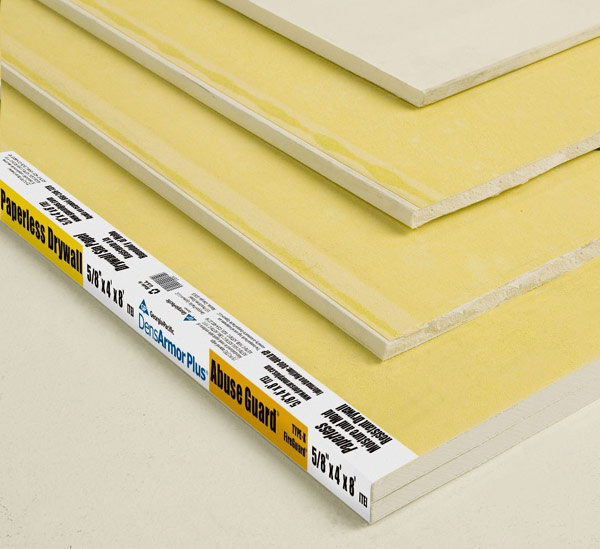
Paperless drywall uses a moisture-resistant fiberglass covering instead of paper. This design protects the drywall from water, preventing mold and mildew growth, while also making it stronger and more durable than traditional drywall that uses a paper covering. This makes paperless drywall ideal for bath and shower walls that are above the tile line and behind toilets and vanities. Since paperless drywall is also Greenguard certified, it emits very few volatile organic compounds (VOCs), which is good for indoor air quality.
Best For: Paperless drywall’s moisture resistance makes it ideal for use above the tile line in showers and behind sinks.
6.-CEMENT BOARD DRYWALL
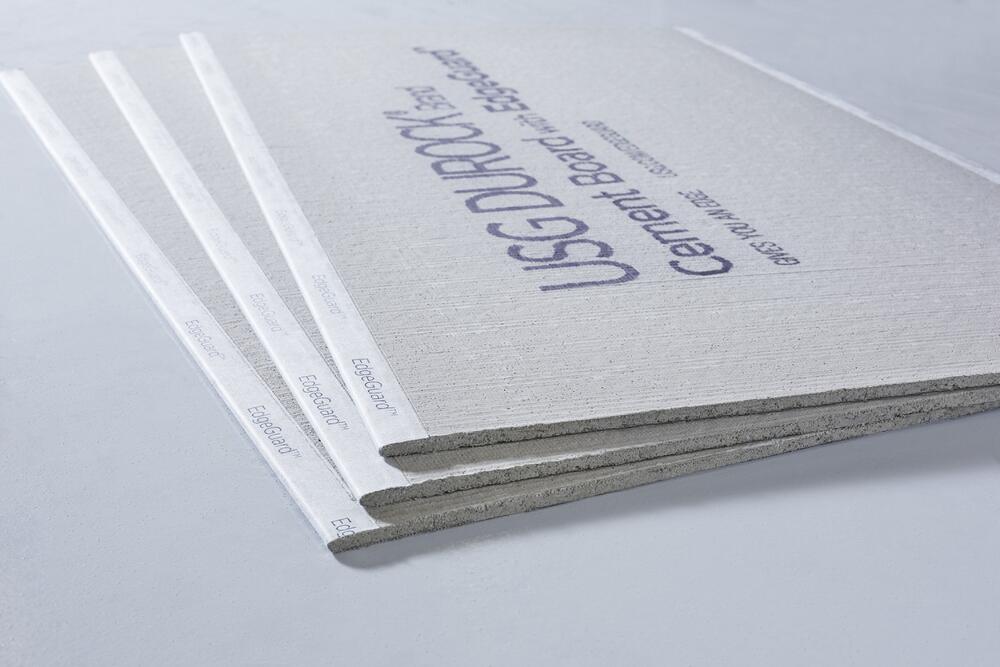
This drywall material is made from cement mixed with fibers that give it enhanced structural integrity and excellent moisture resistance. Also called backer board, cement board’s rigid structure and water-resistant qualities make it a common underlayment for tile in bathrooms and kitchens.
“Cement board is used in direct wet locations with two thin layers of waterproofing membrane rolled on, Due to its heavier weight, most cement board is sold in smaller 3-foot-by-5-foot sheets.
Best For: Cement board is an ideal substrate for tile in bathrooms and kitchens
7.-TYPE X DRYWALL
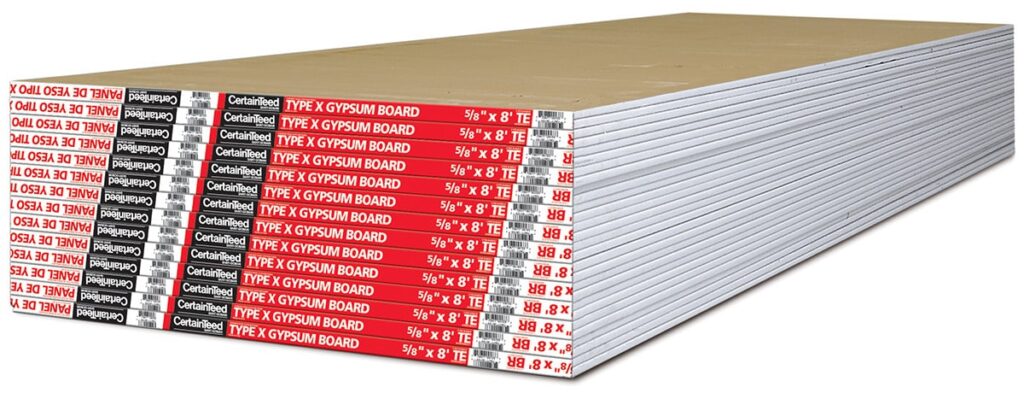
This 5/8-inch thick drywall offers a greater degree of fire resistance than other types of drywall thanks to glass fibers in its core that make it significantly more fire-resistant than standard drywall. Whereas standard drywall can withstand fire for 30 minutes, type X drywall has a 1-hour fire rating. Though sometimes used in homes, type X drywall is usually installed in commercial buildings, such as hotels, schools, and office buildings. It’s usually used to add fire protection around utility rooms and furnaces and to separate various fire zones within a building.
Best For: Typically used in commercial buildings to meet certain fire safety codes.
8.- TYPE C
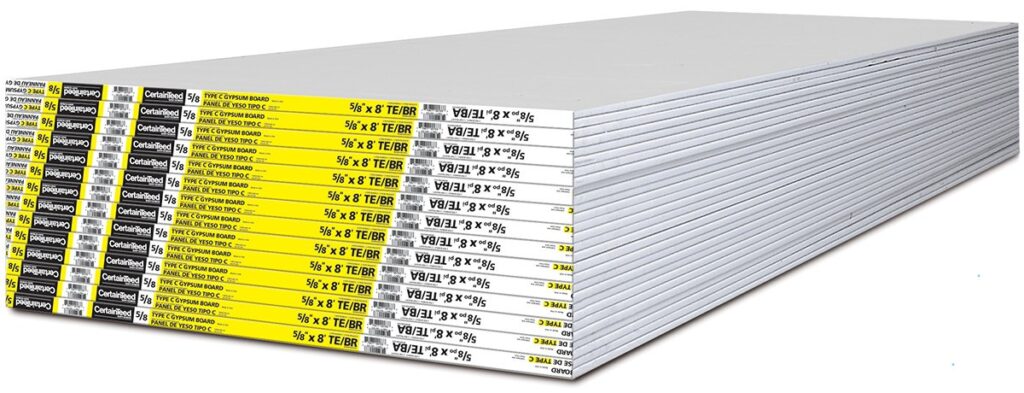
Similar to Type X drywall, type C is a fire-resistant type of drywall. Like Type X, type C is 5/8-inch thick and has a gypsum core infused with glass fibers. Since type C has a higher percentage of glass fibers in its core, it’s more fire-resistant than type X. While type X drywall is commonly used for walls, type C is a common fire-resistant drywall to use for ceilings and other horizontal applications that must meet certain fire resistance codes.
“For fire-rated applications, we used type X on walls and C on ceilings because C is lighter and counts as 2X layers,” Colluzzi says.
Best For: While type C is most often used in commercial applications, it can be used in homes for ceilings in utility rooms with furnaces.
9.-SOUNDPROOF WALLS
Soundproof drywall is made by sandwiching layers of viscoelastic materials and ceramics between gypsum. These additives reflect sound waves, effectively trapping them in the wall to reduce noise. Soundproof drywall is typically used in entertainment rooms, music studios and for shared walls in apartment buildings.
Best For: Soundproof drywall is a good solution for dampening noise from an entertainment room or in-home music studio.