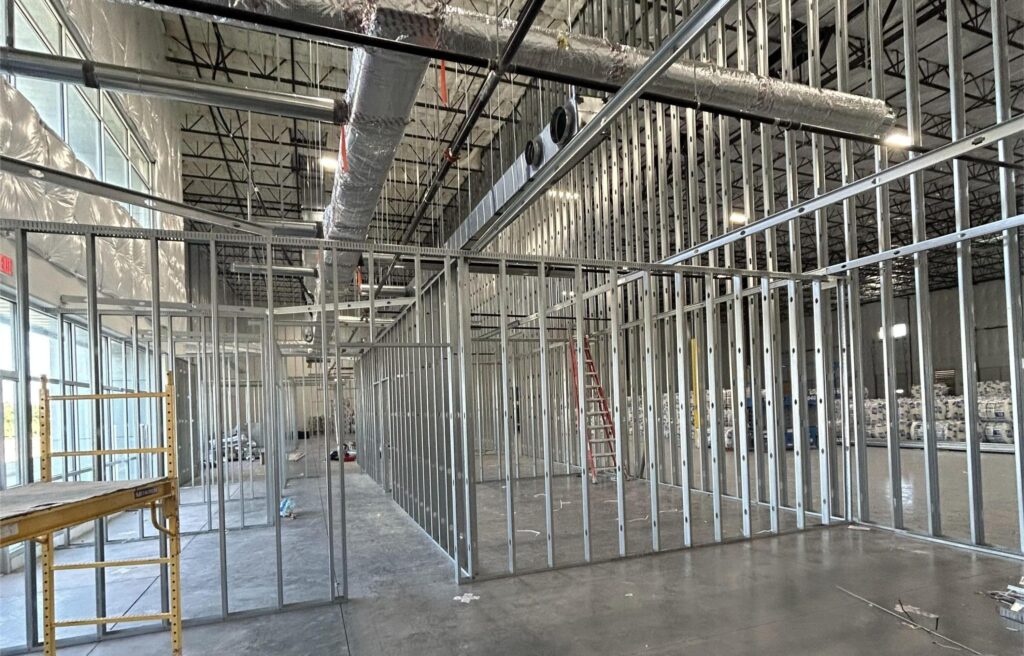


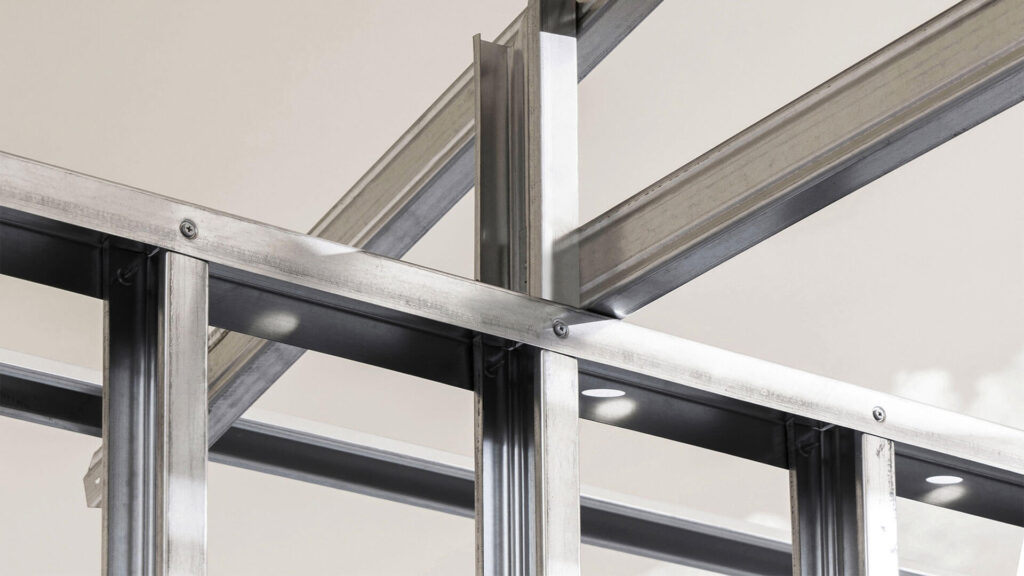
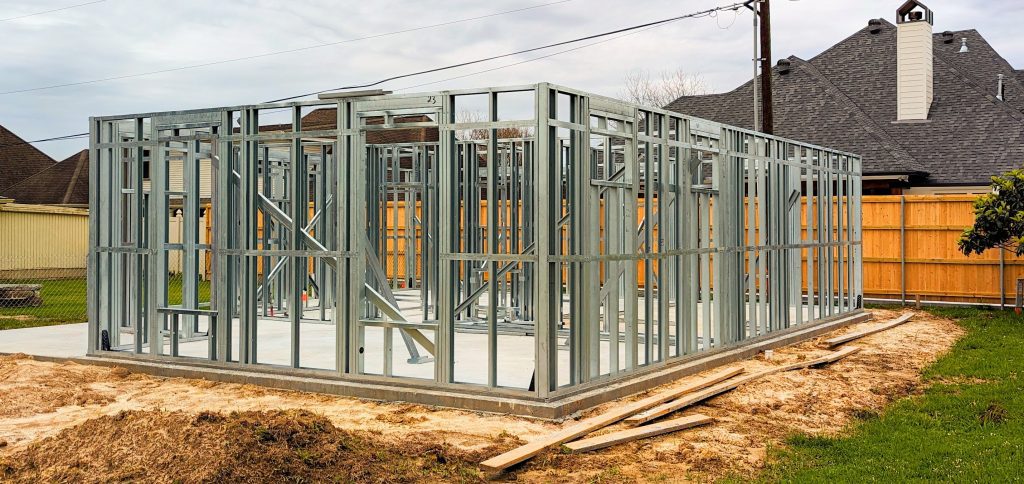
Metal framing, specifically light-gauge steel, is a durable, fire-resistant, and dimensionally stable alternative to wood, commonly used for commercial and residential interior walls and partitions. While slightly more expensive than wood, it is lightweight, easy to handle, and does not rot, warp, or suffer from pest infestation, often reducing long-term maintenance costs.
Key Advantages and Characteristics
- Performance: Extremely high strength-to-weight ratio allows for taller, more robust structures.
- Stability: Steel studs remain perfectly straight, avoiding the bowing, twisting, and shrinking common in lumber.
- Safety: Non-combustible, making it highly fire-resistant.
- Convenience: Components are lightweight and often pre-assembled, making them easier to transport and handle.
Types and Components
- Structural Steel Studs: Used for load-bearing walls, engineered for heavy-duty support.
- Non-Structural (Drywall) Studs: Thinner, lighter-gauge studs primarily for interior partitions.
- Components: Includes C-shaped studs, U-shaped tracks (for top/bottom plates), and metal corners for reinforcements.
Key Applications of Metal Framing:
- Interior Partitions & Non-Structural Walls: Ideal for framing interior walls in homes, offices, and hotels because they are straight, lightweight, and do not warp.
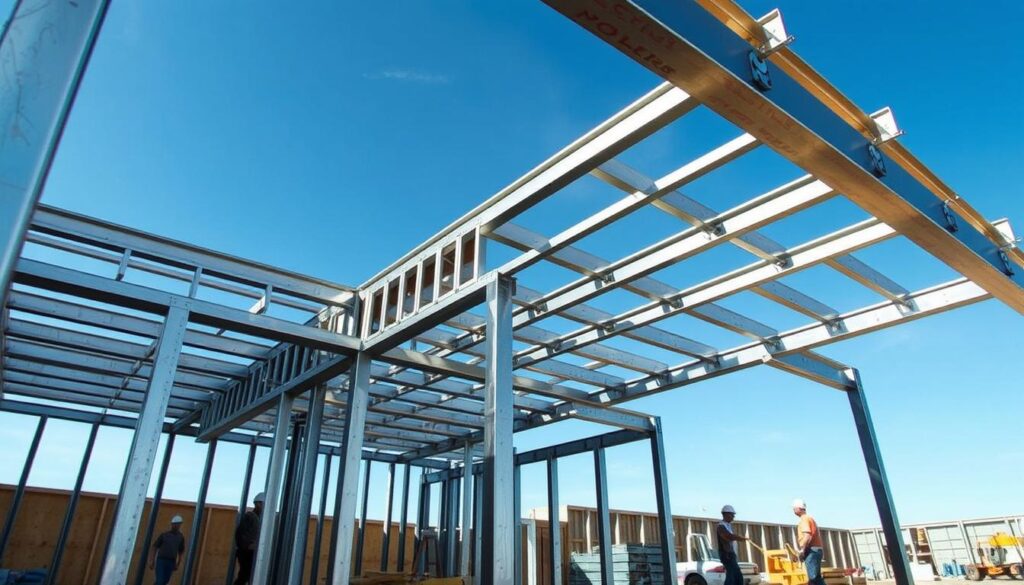
- Exterior Load-Bearing Walls: Used for structural support in low-to-mid-rise residential, hotel, and commercial buildings.
- Commercial & Industrial Buildings: Used to construct warehouses, storage facilities, and agricultural barns, with capabilities for wide, clear-span designs.
- Suspended Ceilings: Metal furring systems are used to create secure, lightweight frames for plasterboard ceilings.
- Tiny Homes & Modular Construction: Due to being approximately 30% lighter than wood, it is excellent for mobile, smaller, or modular projects.
- Specialized Areas: Ideal for food processing plants or wet areas, as it resists mold and corrosion.